They Defended Democracy. Now, Guatemala’s Indigenous Face Terrorism Charges
September 15, 2025 | Guatemala
written by Cassandra van Douveren | photos by Fritz Pinnow
For many Guatemalans, Independence Day is a special occasion. Students run through towns carrying flaming torches, celebrating the independence of Central America from Spanish colonial rule.
But not in Sololá. In this highland region overlooking the scenic Lake Atitlán, people are in protest. The Indigenous Municipality, an ancestral authority of Maya leadership that governs alongside state institutions, has banned the celebrations.
“Independence means that we are free. But as Maya people, we are not free,” says Simíon Palax Chiroy, the Indigenous mayor of Sololá.
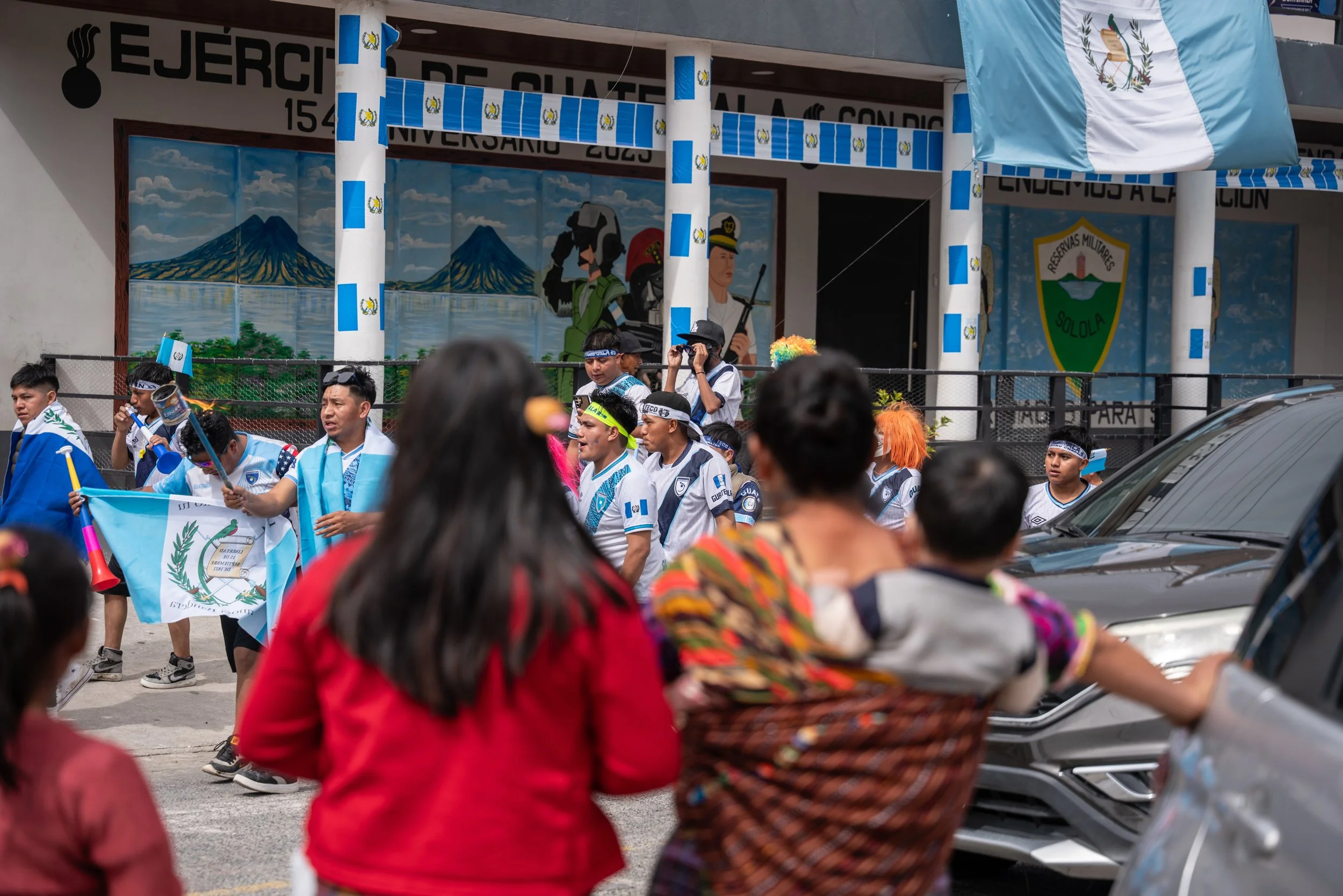
Independence Day in Guatemala, September 14
Palax is referring to the arrest of his predecessor, Esteban Toc Tzay. On 28 August, as Toc travelled to receive treatment for chronic kidney failure, he was detained by authorities. He now faces charges including terrorism.
Toc is the third Indigenous leader to be arrested on such grounds. In April, Luis Pacheco and Héctor Chaclán, the former President and Treasurer of another Indigenous authority, the 48 Cantons of Totonicapán, were also detained.
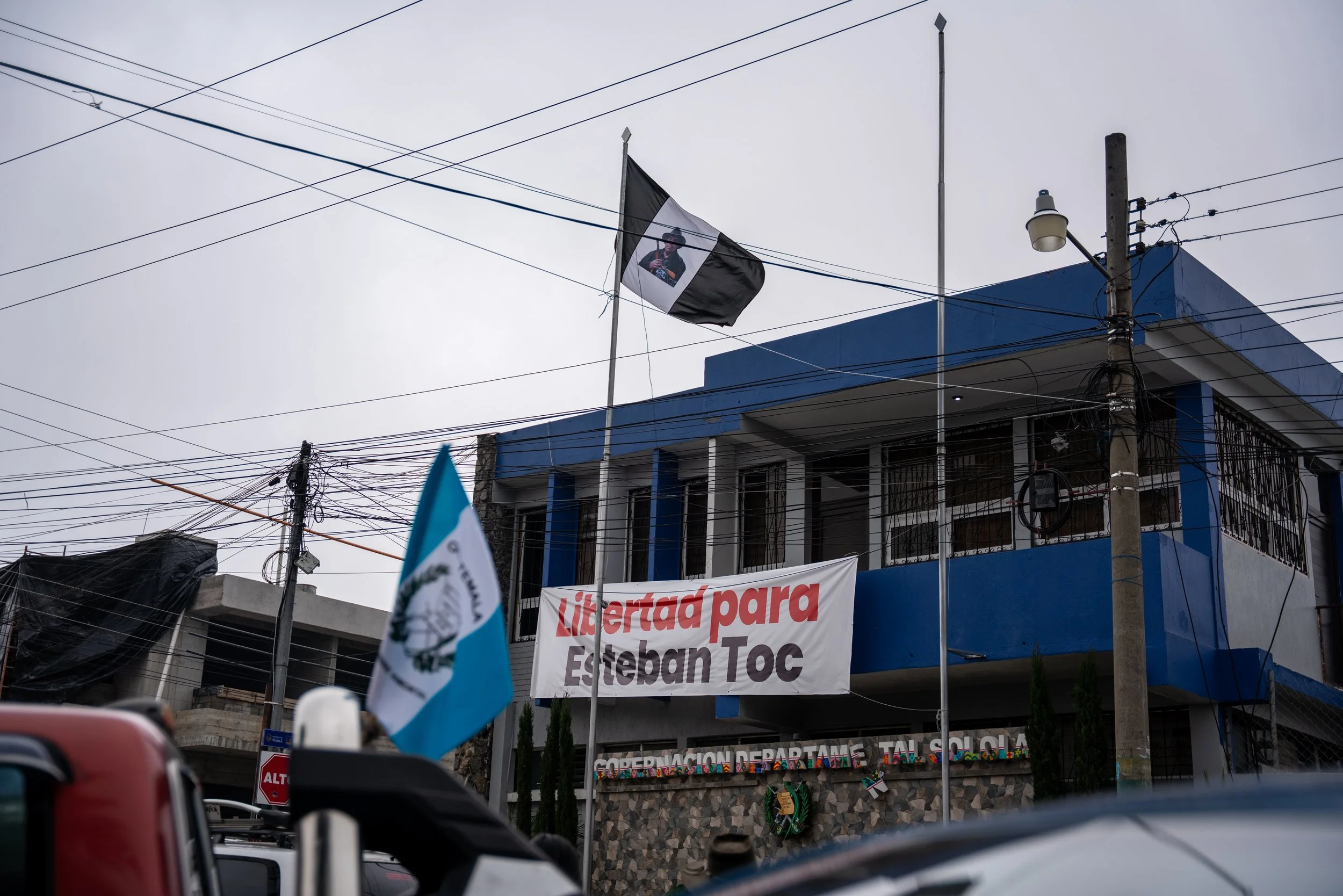
While the rest of the country celebrates, banners outside the building call for “Freedom for Esteban Toc”
The three leaders played key roles in Guatemala’s 2023 pro-democracy protests. After the victory of anti-corruption candidate Bernardo Arévalo, the political elite sought to overturn the result, in what international organisations described as an “attempted coup.”
Indigenous leaders were among the first to mobilise, spearheading 106 days of demonstrations, blocking key roads until the president was sworn in. They also demanded the resignation of Attorney-General María Consuelo Porras, whom they saw as central to attempts to block Arévalo from taking office.
Now, the Attorney General’s Office is prosecuting them for their role in the protests. According to Dennis Cesneros, the prosecutor on the case, the terrorism charges apply to those who seek to “violently overturn the institutional structure of the state.”
But analysts argue that the prosecutions appear to be an intimidation tactic ahead of 2026, when Guatemala will hold multiple critical elections, including for Attorney General and the Constitutional Court.
Pacheco, a K’iche Maya leader who was central to the protests, says the movement was never about Arévalo as a leader. It was about defending democracy itself, which he calls “sacred” to Indigenous ways of life. “Democracy is a system based on mutual respect. As Indigenous people, we don’t want power. All we wanted was respect.”
After Bolivia, Guatemala is home to the second-largest Indigenous population in Latin America, with almost half the country identifying as Maya, Xinca or Garifuna.
For many in these communities, the arrests of their leaders recall the country’s 36-year civil war, the bloodiest in Latin America, which left 200,000 dead. During the conflict, Indigenous populations were disproportionately targeted, in what a UN-backed commission concluded amounted to “acts of genocide.”
When Pacheco and Chaclán were detained, it was in a white van, echoing the forced disappearances once carried out by the military. “They intimidate us, persecute us and lock us up, without any information about our process,” says Chaclán. “It is psychological terror, a war by other means.”
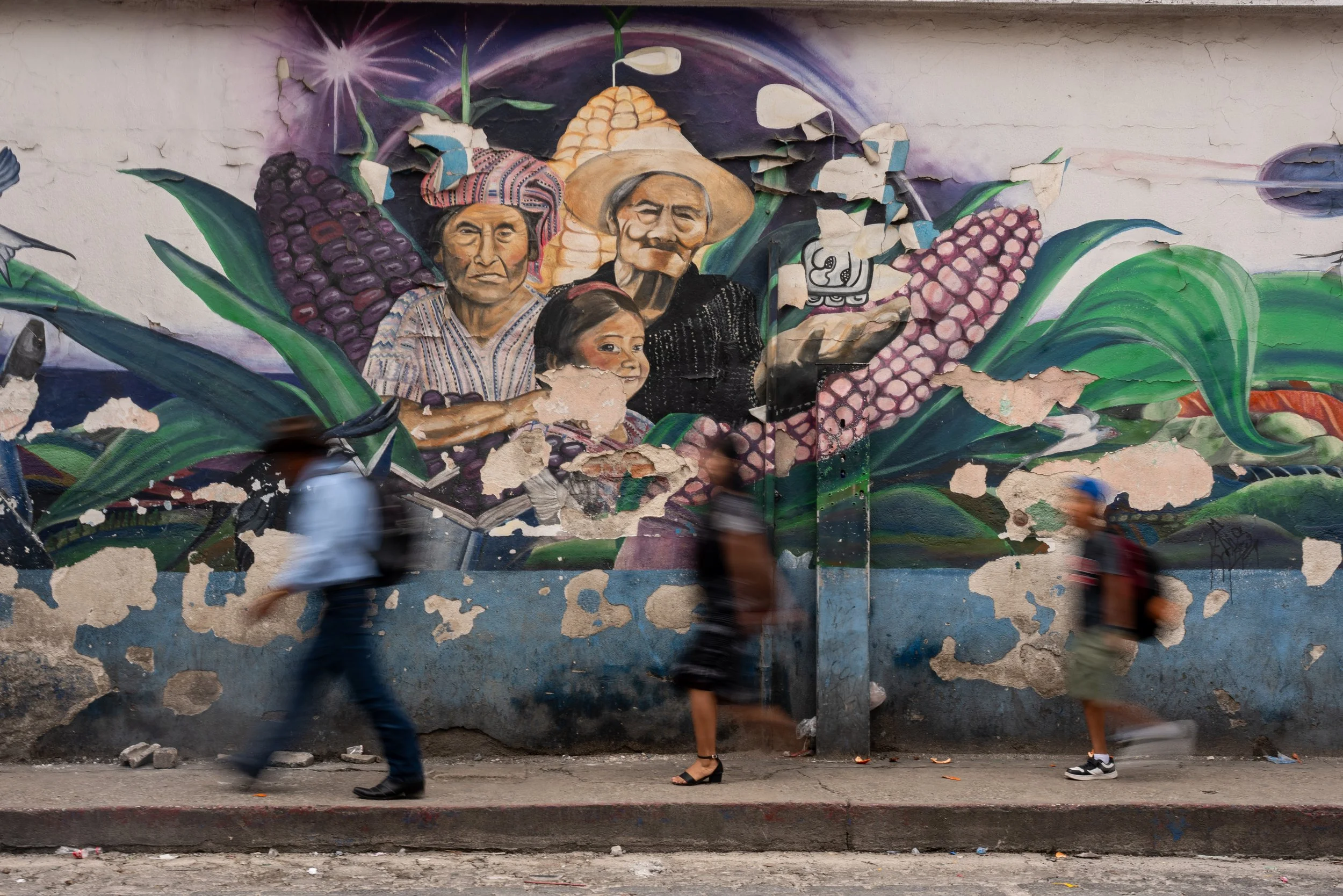
A mural depicting Indigenous resistance in Sololá
Ricardo Méndez-Ruiz, the complainant leading the case, rejects claims that the arrests amount to political persecution or discrimination. But he too agrees that they should be understood within the legacy of the armed conflict.
A former soldier, Méndez-Ruiz was kidnapped during the conflict, while his father served as a senior officer during some of its most brutal campaigns. This experience left him convinced that the remnants of the guerrilla movement survive today in Guatemala’s left and civil society. “We signed the Peace Accords, but they [the other side] never stopped fighting.”
In his view, the leaders who led the 2023 protests are terrorists who sought to undermine democracy. In June, the EU sanctioned Méndez-Ruiz himself for actions “that undermine the rule of law in Guatemala.”
The Attorney-General’s office has confirmed that more arrests are planned, targeting three additional Indigenous leaders. But so far, prosecutors have avoided sending authorities into Indigenous territories, fearing confrontation. Toc, who suffers from chronic kidney disease, was only able to be detained when he left Sololá to seek urgent medical care.
Toc’s arrest has provoked anger in the community. For those who lived through the war, it revived memories of 1982, when army units entered Sololá to impose surveillance and carry out disappearances. “Either you negotiate with the authorities, or we’ll take matters into our own hands,” Palax recalls being told.
But Sololá’s Indigenous leadership, a 12-member council, insisted on a non-violent approach. They pressured the Public Prosecutor’s Office until Toc was transferred from prison to house arrest. He is now awaiting trial, which will take place in January. “I think the Public Ministry got scared,” says Palax. “The pressure we applied had an impact.”
The Attorney-General’s office denies that, insisting that it does not give in to threats and that Toc was moved on humanitarian grounds.
The arrests of Indigenous leaders fits within a broader pattern of democratic backsliding in Guatemala. According to Human Rights Watch’s 2024 report, 91 people were forced into exile due to politically motivated persecution, and more than 9,000 attacks on human rights defenders were documented, ranging from intimidation, criminalisation and physical violence.
With neighbours El Salvador and Nicaragua having witnessed an authoritarian turn in recent years, observers are worried Guatemala might be heading down the same route.
Asked whether the arrests are having an impact, Palax admits that the community is scared. With elections for Sololá’s Indigenous Authority due in November, some community members are now reluctant to run for leadership positions, fearing persecution.
Palax himself also feels that fear, preparing his wife and children that there is a high likelihood that he might not return one day. “It is a strategy of divide and rule,” he says. “Either by painting us as criminals to separate us from our communities, or by singling out one indigenous group to make an example out of them.”
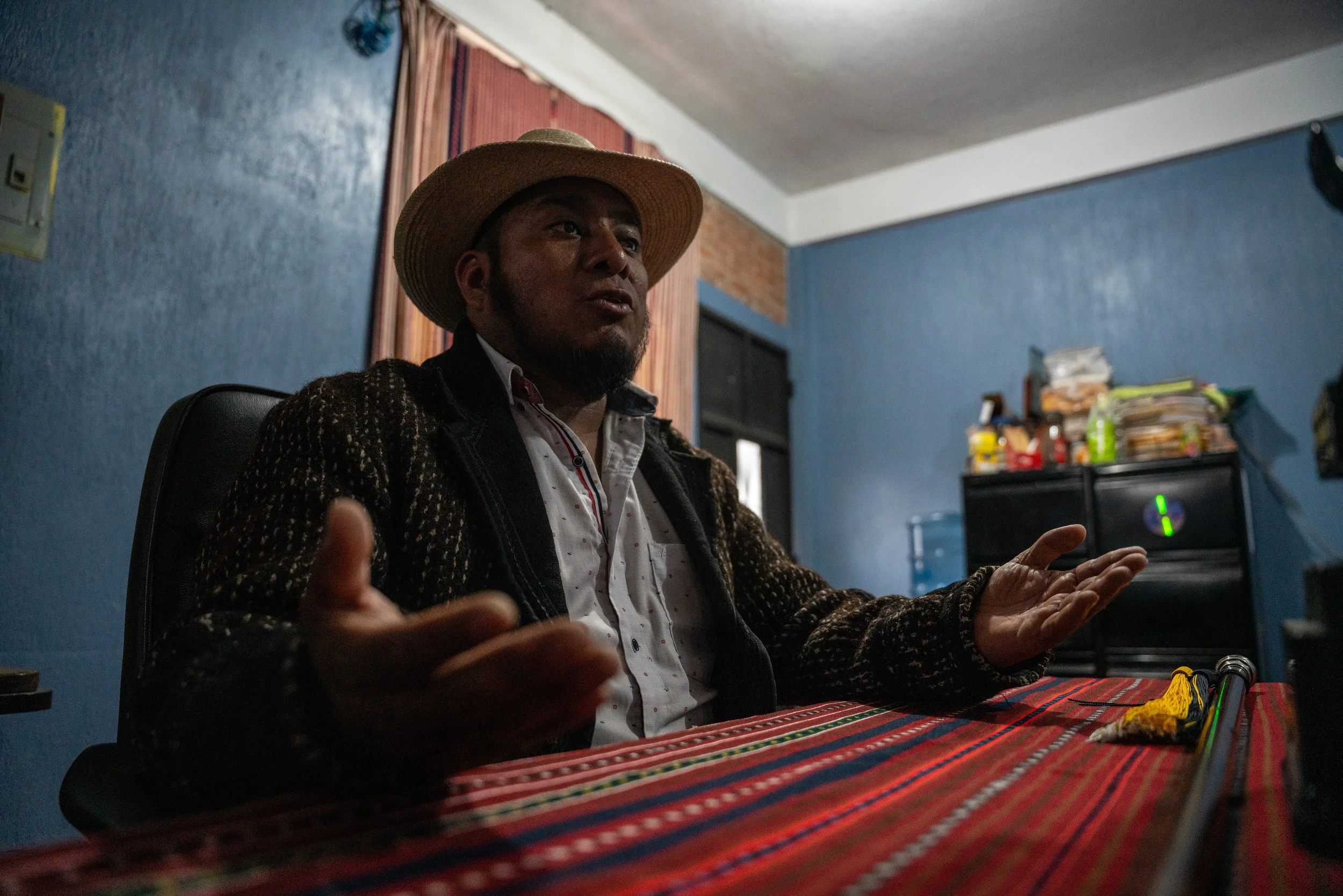
Palax fears for his safety, but remains determined the Indigenous communities will continue to fight back
But, despite efforts by the justice system to divide Indigenous communities, Palax is certain that they will stand united. “If the situation worsens, I know we can count on support from Totonicapán, the Ixiles, the Xinca and beyond,” he says.
“We have been fighting for our rights and way of life for hundreds of years, and we will continue to do so.”